Please note that this talk starts at 1:00 pm as usual(I had posted the incorrect time)
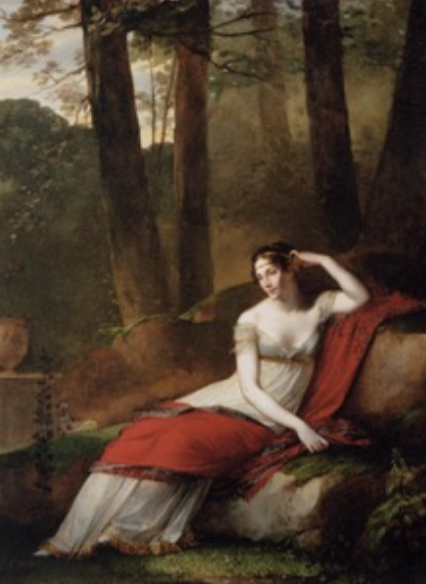
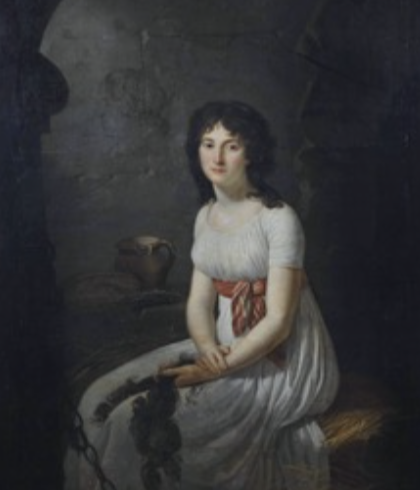
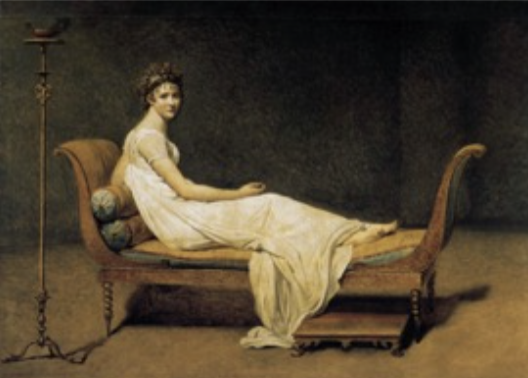
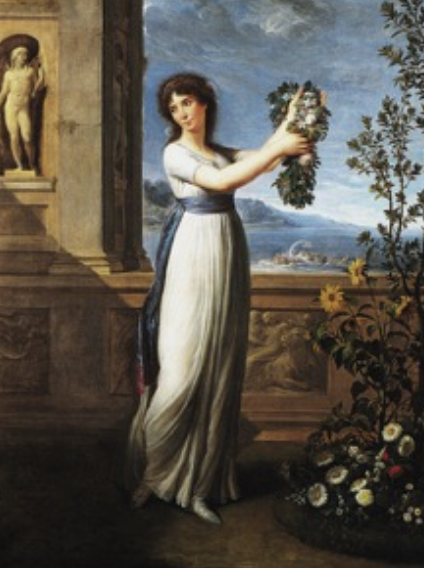
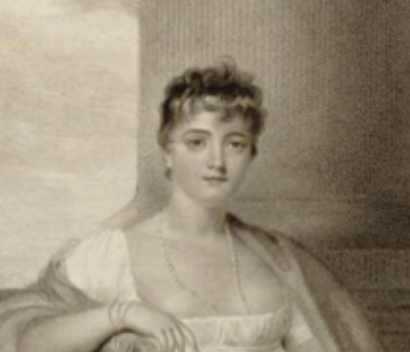
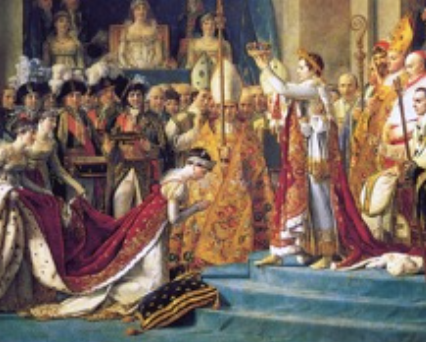
Liberty, Equality, Fashion is about three revolutionary women who turned themselves into style celebrities: Joséphine Bonaparte, future Empress of France; Térézia Tallien, declared the most beautiful woman in Europe; and Juliette Récamier, muse of equal rights advocates.
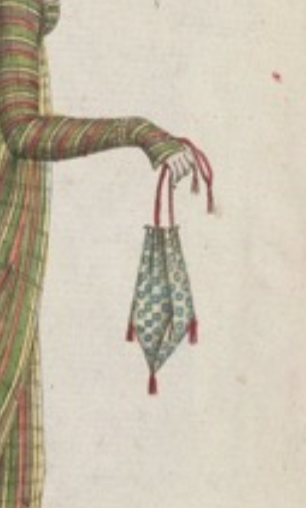
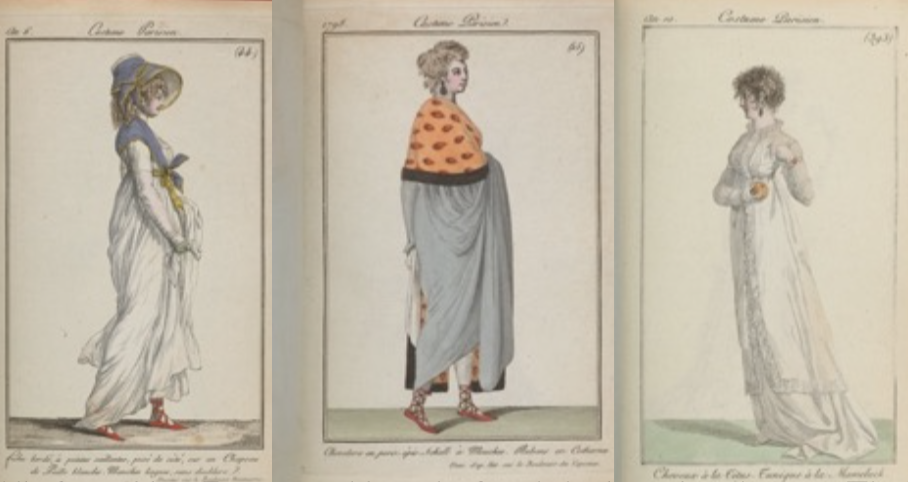
They had emerged in 1794 from the worst violence of the French Revolution, just barely. The three survivors reacted by overthrowing centuries of royal dress codes. They tossed away corsets, petticoats, brocades, and coiffure towers to introduce light, mobile dresses, cropped hair, and the handbag.
Fascination alternated with shock as Joséphine, Térézia and Juliette boldly took control over their sexuality. The French Revolution had defeated monarchy to usher in universal human rights and elected government. No one had imagined it would also include a total change of clothes, let alone one which would express liberty for all women. Women’s freedom was too dangerous to last. After one short decade, Napoleon turned it backward. Revolutionary fashion’s audacity was condemned to oblivion for the next two centuries.
Anne Higonnet is the Barbara Novak Professor of Art History at Barnard College, Columbia University. She received her BA from Harvard College in 1980 and her PhD from Yale University in 1988. She has published, most recently, the widely reviewed Liberty, Equality, Fashion; the Women who Styled the French Revolution, as well as pieces in Vogue, Town & Country, Brooklyn Rail, and the Wall Street Journal. She has written five other books as well as many essays, and directed two book-scale digital projects. Her research has been supported by Getty, Guggenheim, Social Science Research Council, and Harvard-Radcliffe Institute fellowships, as well as by grants from the Mellon, Howard and Kress Foundations. She a prize-winning teacher of popular lecture courses. A hybrid version of her Clothing course has been offered in partnership with National Education Opportunity Network to public high schools across the nation since 2024.